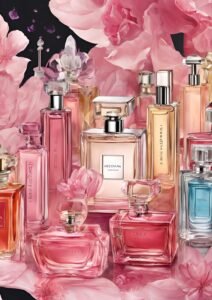
When choosing a perfume, you’ve probably noticed mysterious abbreviations such as EDP, EDT, or Parfum on the bottle. These seemingly simple letters are actually a built-in code, revealing the fragrance concentration and how long the scent is likely to last.
Once you learn to read these labels, you can predict the perfume’s longevity even before spraying — an essential skill for every fragrance lover.
The “Identity Code” on Your Perfume Bottle
On the bottle or packaging, you’ll usually find one of the following labels. Listed in order from highest to lowest concentration, these directly influence the fragrance’s performance.
1. Parfum / Extrait de Parfum
Concentration: 20–30%
Longevity: 6–8 hours
Features: The richest and most long-lasting category. Dense, complex, and luxurious. Minimal alcohol, often applied directly to pulse points.
Best for: Special events, nights out, or anyone who wants a fragrance that lasts all day.
2. Eau de Parfum (EDP)
Concentration: 15–20%
Longevity: 4–6 hours
Features: The most popular premium category. Well-balanced with strong staying power yet lighter than Parfum.
Best for: Everyday use, work environments, evening gatherings. Ideal as a “signature scent.”
3. Eau de Toilette (EDT)
Concentration: 5–15%
Longevity: 3–4 hours
Features: Light, fresh, easy to wear, and suitable for reapplication. Typically has a more pronounced top note.
Best for: Daily wear, casual occasions, warm weather, and fragrance beginners.
4. Eau de Cologne (EDC)
Concentration: 2–5%
Longevity: 1–2 hours
Features: Traditionally citrus-based and refreshing. High alcohol content with a very light scent presence.
Best for: Post-exercise, hot weather, or when you want a subtle, airy fragrance.
Advanced Tips: More Than Just Letters
These labels provide a valuable starting point — but true fragrance experts know it doesn’t stop there. Several other factors influence longevity:
1. The Fragrance Family Matters
Oriental, Woody, Chypre: Often contain fixatives like amber, musk, sandalwood. Even EDTs in these families may feel richer and longer-lasting than a floral EDP.
Citrus, Aquatic, Green: Naturally airy and volatile. Even EDP versions may require more frequent reapplication.
2. Brand Interpretation Varies
Niche houses often follow strict concentration standards. Their Parfums feel genuinely “high couture.”
Commercial brands sometimes label a 12% fragrance as EDP to match consumer expectations.
This is why sampling on skin is always essential.
3. Your Skin Chemistry Is the Final Judge
Oily skin: Holds fragrance longer.
Dry skin: Faster evaporation — may need higher concentration or reapplication.
Best testing method: Spray on your wrist and check the smell after 4 and 8 hours. This gives the most accurate personal result.
How to Choose Perfume Like a Pro
Follow this easy 3-step method on your next purchase:
Step 1: Read the Label
Identify whether it’s EDP, EDT, etc., to set your expectations.
Step 2: Check the Notes
If the base notes include vanilla, musk, patchouli, cedarwood, or amber, expect a longer-lasting scent.
Step 3: Test on Skin
Always test on your skin — not just blotter cards — to understand how the scent truly develops.
Conclusion: The Letters Are the Map, Not the Destination
The label (Parfum, EDP, EDT, EDC) gives you a helpful guide to scent concentration and longevity. But the real experience depends on a blend of:
fragrance composition
quality of raw materials
your personal skin chemistry
the environment
Learning the letters is the beginning of smart fragrance shopping — trusting your nose is where the real magic begins. Now, with your new knowledge, go explore the world of scents — your perfect long-lasting perfume is waiting.
Pro Tip for Longer Lasting Fragrance
To extend longevity:
Apply fragrance on moisturized skin using unscented lotion, or
Spray lightly on clothing (test on hidden area first).